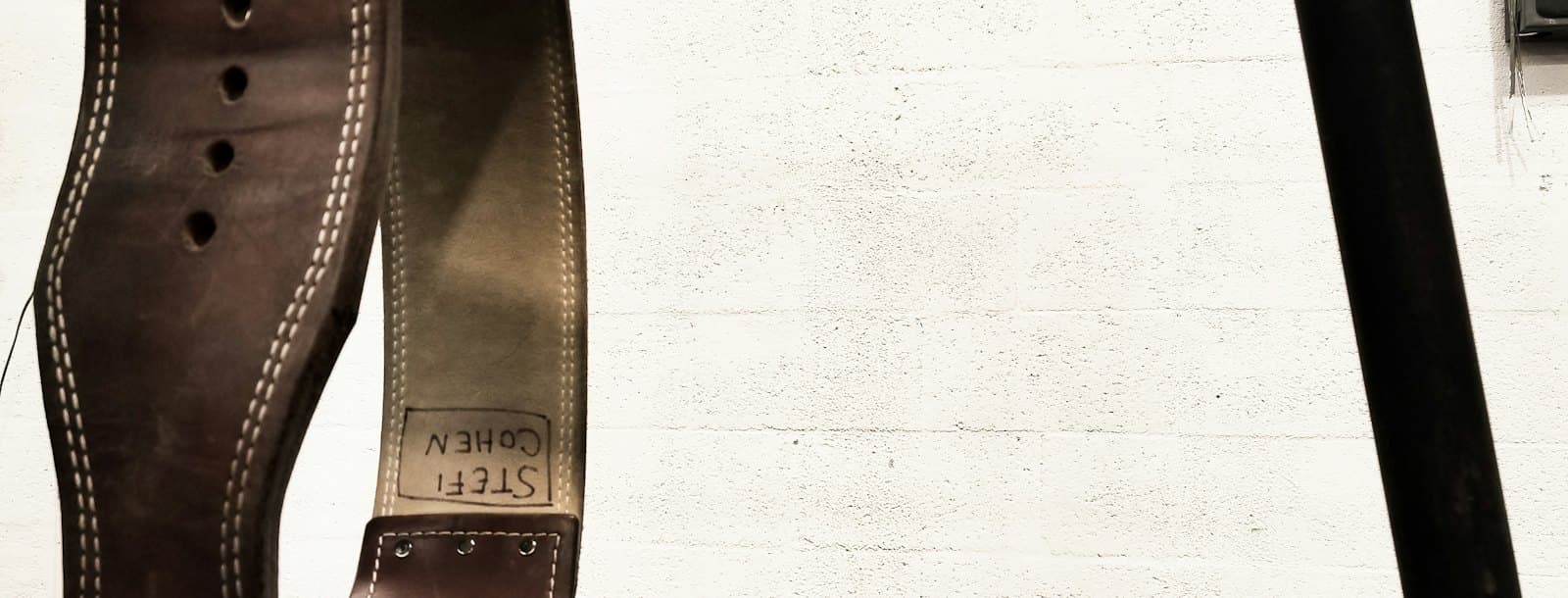
Leather Weight Lifting Belts for Women: Thickness, Break-In and Fit
Leather is the material you move to when a nylon belt has stopped giving you anything to push against. It barely deforms, which means the pressure you generate goes back into your abdomen rather than into the belt. Nothing else does that as well.
The trade-offs are real: leather belts are stiff, they take weeks to break in, and they do not accommodate a changing waist as gracefully as velcro. Knowing which specification to buy avoids most of the regret.
By the Weight Lifting Belt For Women teamUpdated How we test
Our picks: leather belts
Each belt holds one slot. Where a belt has a real drawback for this use case, it is stated on the same card.
Leather Weight Lifting Belts for Women: Thickness, Break-In and Fit. Prices checked 2026-09-09 and subject to change.
Belt
Height
Thickness
Closure
Smallest waist
IPF legal
Price
Gymreapers 10MM Single Prong Leather BeltBest value leather belt
4in straight
10mm
Single prong
24in
No
$47.99-$110.40
Inzer Forever Lever BeltBest lever belt
4in straight
10mm
Lever
24in
Yes
$99.00-$120.00
SBD 13mm Lever BeltBest for maximal powerlifting
4in straight
13mm
Lever
23in
Yes
$190.00-$230.00
Pioneer Cut Custom BeltBest custom belt
3in tapered
10mm
Single prong
21in
Yes
$129.00-$175.00
01Best value leather belt
Gymreapers
10MM Single Prong Leather Belt
A 10mm suede-lined leather belt at roughly half the price of the competition-brand equivalents. Single prong keeps it one-handed to fasten, which matters more than most lifters expect.
Height
4in straight
Closure
Single prong
Material
suede-lined leather
Thickness
10mm
Smallest size
24in waist
Competition
Training only
What works
10mm is the sweet spot: rigid enough for heavy squats, forgiving enough to break in within a month
Single prong is far easier to fasten alone than a double prong
Suede lining grips your shirt instead of sliding up into the ribs
What does not
Stiff out of the box. Budget two to three weeks of rolling and wearing it
Prong holes are set an inch apart, so the fit is coarser than a velcro belt
The default competition lever belt for good reason: one-piece leather with no laminated layers to peel apart, and a lever that closes to exactly the same setting every time.
Height
4in straight
Closure
Lever
Material
leather
Thickness
10mm
Smallest size
24in waist
Competition
IPF approved
What works
The same setting on every set, no guessing which prong hole you used last time
Single-ply leather construction rather than glued layers
IPF approved in the 10mm version, so it is legal on a platform
What does not
Changing the fit means unscrewing and repositioning the lever with a screwdriver
Fixed tightness is a liability if your waist moves through a bulk or across a cycle
Long break-in 10mm Inzer leather is stiff for the first month
13mm is the thickest leather the IPF allows, so this is about as rigid as a competition belt gets. Buy it when you compete and want the firmest belt allowed, not as a first belt.
Height
4in straight
Closure
Lever
Material
leather
Thickness
13mm
Smallest size
23in waist
Competition
IPF approved
What works
The thickest, stiffest leather on this list
IPF approved, so it is legal on an IPF platform
Build quality and hardware tolerances are the benchmark
What does not
Roughly four times the price of a competent 10mm belt
13mm is uncomfortable on a short torso and takes months to break in
Overkill, and a hindrance, for anything other than maximal squat and deadlift
Ordered to your measurements with the height you specify. A 3-inch or tapered cut solves the short-torso problem that no off-the-shelf 4-inch belt can. You also choose the leather, the stitching and the artwork.
Height
3in tapered
Closure
Single prong
Material
leather
Thickness
10mm
Smallest size
21in waist
Competition
IPF approved
What works
Height, circumference, thickness and closure are all specified by you
Tapered cut narrows at the front so it does not fold into the hip crease
Available in IPF-legal configurations
What does not
Multi-week build and shipping lead time
Custom orders are generally not returnable. Your measurements have to be right
10mm leather is rigid enough that a near-maximal squat will not meaningfully compress it. It breaks in within a few weeks, it is comfortable enough to wear across a full session, and it sits inside the IPF's 13mm limit. USAPL sets no thickness limit at all.
13mm is the IPF maximum. It is more rigid, but we found no study comparing 10mm and 13mm belts directly, and for most lifters the extra stiffness is mostly a comfort penalty, particularly on a shorter torso, where the extra stiffness makes the belt less willing to sit in a compressed rib-to-hip gap.
The honest rule: buy 10mm unless you have plateaued against a broken-in 10mm belt. 10mm vs 13mm lifting belts covers why.
Lining and finish
A suede or rough-out lining grips fabric. Without it a leather belt slides upward against a synthetic training top under load, which is exactly how a well-sized belt still ends up in your ribs.
Raw, unfinished leather grips better still but is harsher against bare skin. If you train in a crop top, a suede-lined belt is the more comfortable answer.
Breaking a leather belt in
A new 10mm belt will feel like it does not want to bend. This is normal and temporary. Roll it tightly against its natural curve, both directions, for a few minutes at a time. Wear it around the house fastened. Wear it for warm-up sets you would not normally belt.
Do not soak it, do not put it in an oven and do not drive over it. All of these circulate as tips, and all of them damage the leather or the stitching. Time and mechanical rolling are what work.
After two to four weeks a 10mm belt will conform to your torso and stay that way for years.
LeverSame tightness every rep. Screwdriver to resize.
Single prongOne hole for squats, one for pulls. Easy alone.
Double prongStiffer through the buckle. Awkward to fasten alone.
VelcroFine adjustment, fastest on and off. Not IPF legal.
Only leather belts with a prong buckle or a lever are legal in powerlifting competition.
Frequently Asked Questions
Is 10mm or 13mm better for a woman?
10mm for most women. It is rigid enough that it does not deform under a near-maximal squat, breaks in within a few weeks, and is far more comfortable on a shorter torso. 13mm is the competition maximum and adds rigidity that only matters once you have plateaued against a properly broken-in 10mm belt.
How long does it take to break in a leather lifting belt?
Two to four weeks for a 10mm belt in regular use, and longer for 13mm. Speed it up by rolling the belt tightly in both directions for a few minutes at a time and wearing it fastened around the house. Do not soak it or heat it. That damages the leather and the stitching.
Do leather lifting belts stretch?
Good ones barely do. Quality lifting leather is chosen specifically because it does not stretch. What happens instead is that the belt conforms to the curve of your torso during break-in, which feels like it has loosened slightly but is not actual stretch. If a belt stretches under load, it was not made from lifting-grade leather.
How do I clean a leather lifting belt?
Wipe the lining with a barely damp cloth after sweaty sessions and let it air dry away from direct heat. Do not submerge it and do not machine wash it. A leather conditioner once or twice a year keeps the outer surface from drying and cracking, but keep conditioner off a suede lining, which relies on its texture for grip.
Related reading
Where to go next, depending on what you are still deciding.