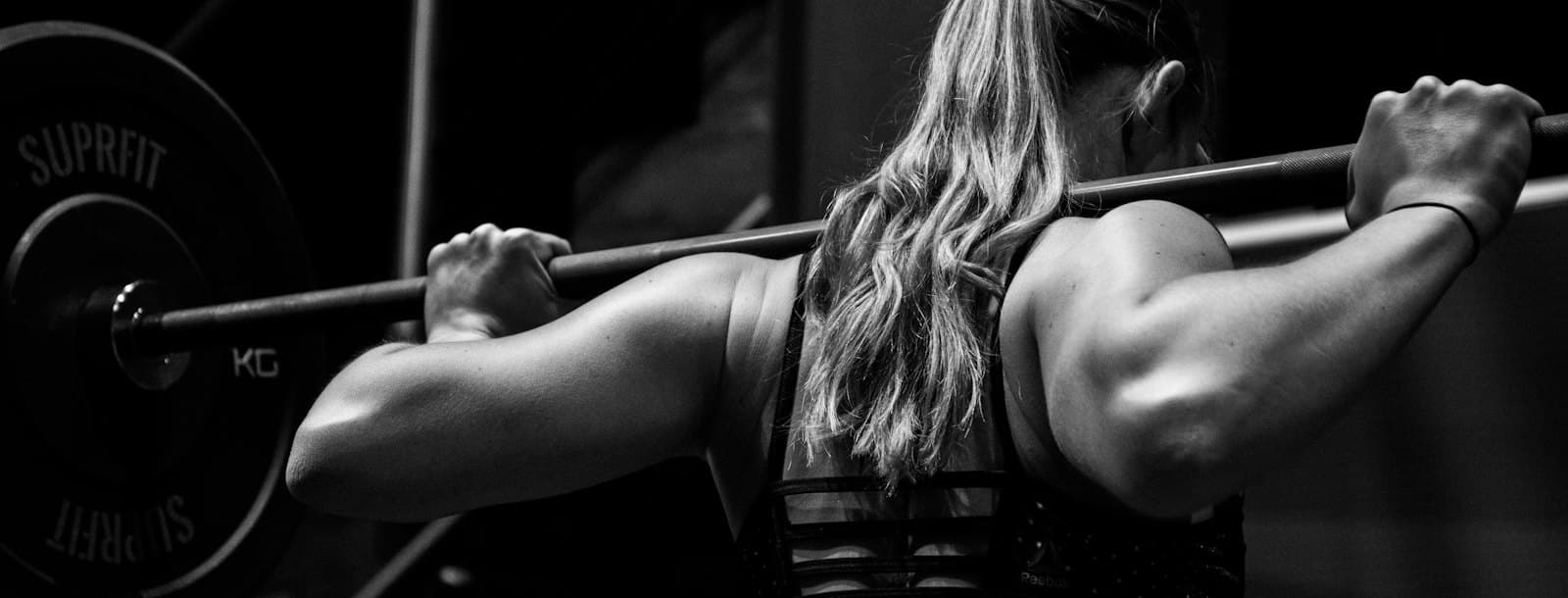
Weight Lifting Belts for Squats: What Changes Under the Bar
The squat is the lift where belt height stops being a comfort preference and becomes a mechanical problem. At the bottom of a squat your rib cage rotates down and your pelvis rotates up. The gap the belt is sitting in physically shrinks. A belt that felt fine standing has nowhere to go.
This is why so many women describe a belt as pinching, riding up or bruising the bottom ribs specifically during squats and not during deadlifts. It is not a tolerance issue. The belt is too tall.
By the Weight Lifting Belt For Women teamUpdated How we test
Our picks: for squats
Each belt holds one slot. Where a belt has a real drawback for this use case, it is stated on the same card.
Weight Lifting Belts for Squats: What Changes Under the Bar. Prices checked 2026-09-09 and subject to change.
Belt
Height
Thickness
Closure
Smallest waist
IPF legal
Price
2POOD 3-inch Petite Weightlifting BeltBest for short torsos
3in straight
Nylon
Velcro
22in
No
$51.99
2POOD 4-inch Straight Weightlifting BeltBest all-round velcro belt
4in straight
Nylon
Velcro
24in
No
$31.99-$64.99
Gymreapers 10MM Single Prong Leather BeltBest value leather belt
4in straight
10mm
Single prong
24in
No
$47.99-$110.40
Inzer Forever Lever BeltBest lever belt
4in straight
10mm
Lever
24in
Yes
$99.00-$120.00
Pioneer Cut Custom BeltBest custom belt
3in tapered
10mm
Single prong
21in
Yes
$129.00-$175.00
01Best for short torsos
2POOD
3-inch Petite Weightlifting Belt
The 3-inch height is the reason to buy it. If a standard 4-inch belt digs into your ribs at the bottom of a squat, this is the fix, and it is one of the very few belts sold in a petite height rather than just a smaller circumference.
Height
3in straight
Closure
Velcro
Material
nylon
Thickness
Nylon
Smallest size
22in waist
Competition
Training only
What works
3-inch height clears the rib cage on torsos under roughly 8.5 inches from bottom rib to iliac crest
Velcro closure adjusts in fine increments, so it still fits across a bloat day or a cut
Goes on and off fast enough for a superset or a CrossFit couplet
What does not
Nylon flexes more than 10mm leather. You will feel the ceiling at heavy singles
Not IPF legal, so it cannot go on a powerlifting platform
The belt most women in a mixed-modal gym need: enough structure to brace against under a heavy front squat, light enough that you will not resent it during metcons.
Height
4in straight
Closure
Velcro
Material
nylon
Thickness
Nylon
Smallest size
24in waist
Competition
Training only
What works
Wide colourway range including the athlete collaborations, at the low end of the price band
Even 4-inch height front to back gives a consistent surface to brace into
Washable webbing survives a sweaty class schedule
What does not
4 inches is too tall for a short torso. Measure first
Velcro eventually loses bite after heavy daily use
A 10mm suede-lined leather belt at roughly half the price of the competition-brand equivalents. Single prong keeps it one-handed to fasten, which matters more than most lifters expect.
Height
4in straight
Closure
Single prong
Material
suede-lined leather
Thickness
10mm
Smallest size
24in waist
Competition
Training only
What works
10mm is the sweet spot: rigid enough for heavy squats, forgiving enough to break in within a month
Single prong is far easier to fasten alone than a double prong
Suede lining grips your shirt instead of sliding up into the ribs
What does not
Stiff out of the box. Budget two to three weeks of rolling and wearing it
Prong holes are set an inch apart, so the fit is coarser than a velcro belt
The default competition lever belt for good reason: one-piece leather with no laminated layers to peel apart, and a lever that closes to exactly the same setting every time.
Height
4in straight
Closure
Lever
Material
leather
Thickness
10mm
Smallest size
24in waist
Competition
IPF approved
What works
The same setting on every set, no guessing which prong hole you used last time
Single-ply leather construction rather than glued layers
IPF approved in the 10mm version, so it is legal on a platform
What does not
Changing the fit means unscrewing and repositioning the lever with a screwdriver
Fixed tightness is a liability if your waist moves through a bulk or across a cycle
Long break-in 10mm Inzer leather is stiff for the first month
Ordered to your measurements with the height you specify. A 3-inch or tapered cut solves the short-torso problem that no off-the-shelf 4-inch belt can. You also choose the leather, the stitching and the artwork.
Height
3in tapered
Closure
Single prong
Material
leather
Thickness
10mm
Smallest size
21in waist
Competition
IPF approved
What works
Height, circumference, thickness and closure are all specified by you
Tapered cut narrows at the front so it does not fold into the hip crease
Available in IPF-legal configurations
What does not
Multi-week build and shipping lead time
Custom orders are generally not returnable. Your measurements have to be right
Why the belt pinches at the bottom and not at the top
Stand up straight and measure from your lowest rib to the top of your hip bone. Now sit down and measure again. For most people the distance shrinks by an inch or more, and for a shorter torso that can take an 8-inch gap down to under 7. The bottom of a squat is closer to the seated measurement than the standing one.
A 4-inch belt in a 7-inch gap has an inch and a half of clearance top and bottom when you are standing, and effectively none when you are folded up in the hole. Something has to give, and it is either your ribs or your hip crease.
The fix is a shorter belt, not a looser one. Loosening a belt to stop it pinching removes the thing you bought it for.
What the belt is doing in a squat
A belt does not hold your spine in place. What it does is give your abdominal wall a rigid surface to push outward against. You take a breath into your belly, brace as if bracing for a punch, and the belt stops your abdomen from expanding freely, which raises intra-abdominal pressure and stiffens the whole trunk.
A stiffer trunk transmits force from your hips to the bar with less energy lost to flexion. The benefit is real but bounded: research on belted squats generally shows modest improvements in force output and bar speed, not transformational ones.
The corollary matters more than the benefit. If you do not brace, the belt does close to nothing. Wearing a belt loose, or wearing it without a proper breath and brace, is decoration.
Thickness: 10mm is the answer for most people
10mm leather is rigid enough that a squat near your limit will not deform it meaningfully. 13mm is more rigid still, but the return is small and the costs are not: worse comfort on a short torso, months of break-in, and roughly triple the price.
Move to 13mm only if you compete and want the firmest belt your federation allows. We found no study showing it adds weight to the bar. The detail is in 10mm vs 13mm lifting belts.
Where to position it
Set the belt so its top edge sits below your bottom rib and its bottom edge clears your hip bones. For most women that is roughly level with the navel, which is lower than where you would wear a fashion belt.
Tightness test: with the belt fastened and your lungs empty, you should be able to slide a flat hand between the belt and your stomach with effort. If you cannot get a hand in, you have no room left to expand into, and you will not be able to brace properly.
Frequently Asked Questions
At what weight should I start wearing a belt for squats?
There is no universal number in pounds, because it depends on your own strength. The usable rule is percentage: belt your working sets above roughly 80% of your one-rep max, and squat your warm-ups and lighter volume work unbelted so your trunk keeps doing the work. If you cannot brace and hold a neutral spine unbelted at a given weight, that weight is too heavy to belt.
Where should a weightlifting belt sit on a woman?
Between your bottom rib and your hip bones, roughly level with your navel, lower than a fashion belt and lower than most people first assume. The top edge should not contact your ribs when you sit down. If it does at the bottom of a squat, the belt is too tall for your torso rather than positioned wrongly.
Does a lifting belt make you squat more?
Modestly, and only if you brace correctly against it. Studies on belted squatting generally report small improvements in force production and bar velocity rather than large jumps in one-rep max. The belt raises intra-abdominal pressure and stiffens the trunk, which reduces energy lost to spinal flexion. It does not add strength you do not have.
Why does my lifting belt hurt my ribs when I squat?
Almost always because the belt is taller than the vertical gap between your bottom rib and hip bone once you are folded up in the bottom position. Measure that gap seated. If it is under about 8.5 inches, move to a 3-inch belt or a tapered cut. Loosening the belt is not a fix. It removes the support you bought it for.
Related reading
Where to go next, depending on what you are still deciding.