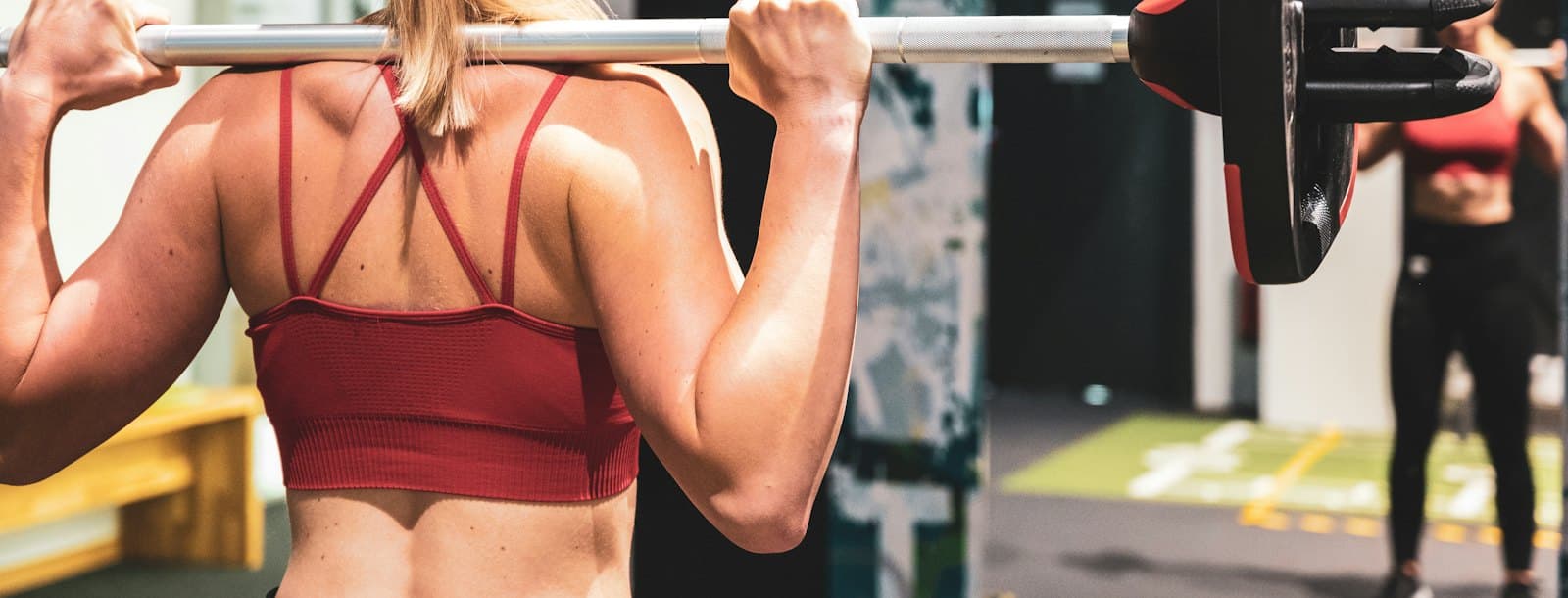
Powerlifting Belts for Women: Federation Rules and Real Fit
Once you enter a meet, belt choice stops being purely about comfort and starts being about a rulebook. The frustrating part for women is that the rulebook was written around a 4-inch belt, and the federations cap maximum width without setting any minimum, which is the loophole that makes a competition-legal short belt possible.
Search interest here is climbing fast: 'powerlifting belt for women' is up roughly 100% year on year, which tracks the growth in women's participation at meets.
By the Weight Lifting Belt For Women teamUpdated How we test
Our picks: powerlifting
Each belt holds one slot. Where a belt has a real drawback for this use case, it is stated on the same card.
Powerlifting Belts for Women: Federation Rules and Real Fit. Prices checked 2026-09-09 and subject to change.
Belt
Height
Thickness
Closure
Smallest waist
IPF legal
Price
Gymreapers 10MM Single Prong Leather BeltBest value leather belt
4in straight
10mm
Single prong
24in
No
$47.99-$110.40
Inzer Forever Lever BeltBest lever belt
4in straight
10mm
Lever
24in
Yes
$99.00-$120.00
SBD 13mm Lever BeltBest for maximal powerlifting
4in straight
13mm
Lever
23in
Yes
$190.00-$230.00
Pioneer Cut Custom BeltBest custom belt
3in tapered
10mm
Single prong
21in
Yes
$129.00-$175.00
01Best value leather belt
Gymreapers
10MM Single Prong Leather Belt
A 10mm suede-lined leather belt at roughly half the price of the competition-brand equivalents. Single prong keeps it one-handed to fasten, which matters more than most lifters expect.
Height
4in straight
Closure
Single prong
Material
suede-lined leather
Thickness
10mm
Smallest size
24in waist
Competition
Training only
What works
10mm is the sweet spot: rigid enough for heavy squats, forgiving enough to break in within a month
Single prong is far easier to fasten alone than a double prong
Suede lining grips your shirt instead of sliding up into the ribs
What does not
Stiff out of the box. Budget two to three weeks of rolling and wearing it
Prong holes are set an inch apart, so the fit is coarser than a velcro belt
The default competition lever belt for good reason: one-piece leather with no laminated layers to peel apart, and a lever that closes to exactly the same setting every time.
Height
4in straight
Closure
Lever
Material
leather
Thickness
10mm
Smallest size
24in waist
Competition
IPF approved
What works
The same setting on every set, no guessing which prong hole you used last time
Single-ply leather construction rather than glued layers
IPF approved in the 10mm version, so it is legal on a platform
What does not
Changing the fit means unscrewing and repositioning the lever with a screwdriver
Fixed tightness is a liability if your waist moves through a bulk or across a cycle
Long break-in 10mm Inzer leather is stiff for the first month
13mm is the thickest leather the IPF allows, so this is about as rigid as a competition belt gets. Buy it when you compete and want the firmest belt allowed, not as a first belt.
Height
4in straight
Closure
Lever
Material
leather
Thickness
13mm
Smallest size
23in waist
Competition
IPF approved
What works
The thickest, stiffest leather on this list
IPF approved, so it is legal on an IPF platform
Build quality and hardware tolerances are the benchmark
What does not
Roughly four times the price of a competent 10mm belt
13mm is uncomfortable on a short torso and takes months to break in
Overkill, and a hindrance, for anything other than maximal squat and deadlift
Ordered to your measurements with the height you specify. A 3-inch or tapered cut solves the short-torso problem that no off-the-shelf 4-inch belt can. You also choose the leather, the stitching and the artwork.
Height
3in tapered
Closure
Single prong
Material
leather
Thickness
10mm
Smallest size
21in waist
Competition
IPF approved
What works
Height, circumference, thickness and closure are all specified by you
Tapered cut narrows at the front so it does not fold into the hip crease
Available in IPF-legal configurations
What does not
Multi-week build and shipping lead time
Custom orders are generally not returnable. Your measurements have to be right
The IPF technical rules set a maximum belt width of 10 centimetres and a maximum thickness of 13 millimetres across the main blade. They also require the belt to be a single or laminated piece of leather, vinyl or similar non-stretch material, with a buckle attached by prongs, or a lever.
The critical detail most women miss: 10cm is a ceiling. A 3-inch (7.6cm) belt is inside the ceiling and therefore legal, provided it comes from a manufacturer on the IPF's approved list. If your torso cannot use a 4-inch belt, you are not forced out of competition. You need an approved narrower one.
Approved-equipment lists are updated periodically and differ between federations. Confirm against your federation's current list before you order, not against a forum post.
Lever versus prong on the platform
A lever gives identical tightness every attempt, which is valuable when you are nervous and moving fast between lifts. The cost is that you cannot change the setting without a screwdriver, so you are locked into one tightness for squats and deadlifts both.
Single-prong belts let you run a tighter hole for squats and a looser one for pulls, and they are faster to adjust in a warm-up room. Double-prong belts are stiffer through the buckle but awkward to fasten alone, which is a real consideration if you are handling your own warm-ups.
The IPF rulebook explicitly permits one-prong, two-prong and lever buckles, so the choice is yours to make on practical grounds. The training-side trade-offs are in lever vs prong belts.
13mm is not automatically better
The maximum allowed thickness is not the recommended thickness. 13mm leather on a short torso is unforgiving in a way that costs more in squat depth and comfort than it returns in rigidity, and a broken-in 10mm belt outperforms a stiff-as-board 13mm belt you cannot brace properly against.
Plenty of strong female lifters compete in 10mm. Move up only if you have plateaued against a properly broken-in 10mm belt.
Frequently Asked Questions
Is a 3-inch belt legal in IPF powerlifting?
Yes. The IPF sets a maximum belt width of 10cm (about 4 inches) with no minimum, so a 3-inch belt is within the rules. The belt still has to come from a manufacturer on the IPF's approved list, so width alone is not enough. Confirm against the current published list before ordering.
What thickness powerlifting belt should a woman use?
10mm suits most female lifters. It is rigid enough that it does not meaningfully deform under a near-maximal squat, it breaks in within a few weeks, and it is comfortable on a shorter torso. 13mm is the legal maximum and is worth moving to only once a broken-in 10mm belt has stopped producing progress.
Do I need a lever belt to compete?
No. Single-prong belts are legal and are often more practical, because you can run a tighter setting for squats and a looser one for deadlifts. A lever's advantage is repeatable tightness under meet-day nerves; its disadvantage is that changing the setting requires a screwdriver.
Can I wear a nylon or velcro belt in a powerlifting meet?
Not in IPF competition. The IPF requires leather, vinyl or similar non-stretch material and bans added padding, so nylon velcro belts do not qualify. Federations differ: USAPL's 2026 rulebook limits only belt width. Check your own federation's current rulebook before assuming either way.
Related reading
Where to go next, depending on what you are still deciding.